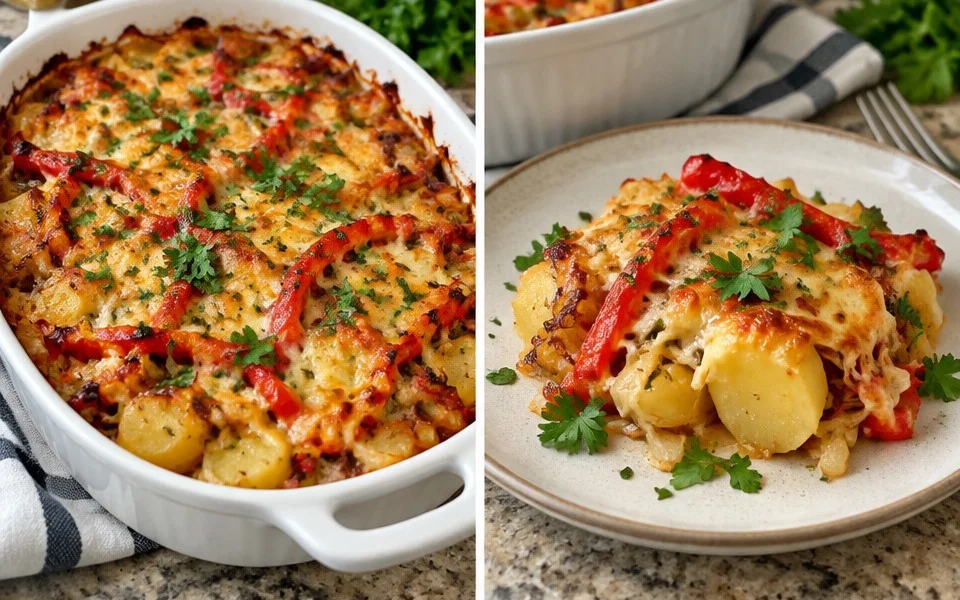
This simple skillet recipe combines everyday vegetables like potato, onion, bell pepper, and cabbage into a comforting, cheesy dish that’s easy to prepare and satisfying. It’s perfect for those who appreciate rustic, homey flavors with minimal fuss and can fit well into vegetarian meal plans. The dish is naturally filling thanks to the potato and cabbage, and the melting cheese on top adds a lovely richness, making it a balanced option for lunch or dinner. If you want a hearty, easy-to-make recipe with everyday ingredients, this one will quickly become a staple. For those looking to increase meal protein, you might find pairing it with a high-protein breakfast helpful; you can explore ideas on boosting protein at breakfast.
Why This Recipe Is Helpful
- Uses common, affordable ingredients easily found in most kitchens.
- Combines sautéing and baking for a flavorful, layered texture.
- Suitable for vegetarians and can serve as a nutritious side or main dish.
Best For
Home cooks looking for a straightforward, vegetable-packed recipe that delivers comfort and flavor without complexity.
Be Careful If
You are sensitive to dairy or lactose, as the cheese topping contains milk-based ingredients. Adjust seasoning carefully to personal taste since the vegetables soften for a delicate flavor.
Ingredients
- 1 medium potato (about 5-6 oz / 140-170 g)
- 1 medium onion (about 5 oz / 140 g)
- 1 medium bell pepper (about 6 oz / 170 g)
- 400 g (14 oz) cabbage, shredded or chopped
- 2 tablespoons (30 ml) vegetable oil
- Salt, to taste
- Black pepper, to taste
- Dried oregano, to taste (about ½ teaspoon recommended)
- 100 g (3.5 oz) cheese such as scamorza, mozzarella, or any good melting cheese
- Fresh parsley, chopped, about 1-2 tablespoons (for garnish)
Ingredient Notes
- Potato adds starch and a creamy texture once cooked, making the dish more filling.
- Cheese choice affects flavor intensity; scamorza offers a smoky note, while mozzarella is milder.
- Fresh parsley brightens the dish and should be added just before adding cheese.
- Dried oregano pairs well with sautéed cabbage and gives a subtle herbal warmth.
Kitchen Tools Needed
- Large skillet with a lid (oven-safe preferred)
- Sharp knife and cutting board
- Oven preheated to 190°C (375°F)
Step-by-Step Instructions
- Peel the potato and dice it into small, evenly sized cubes (~½-inch).
- Peel and finely chop the onion for even cooking.
- Wash and dice the bell pepper into small pieces about the same size as the potato.
- Shred or roughly chop the cabbage into bite-size pieces for quick softening.
- Heat the vegetable oil in a large skillet over medium-low heat; this slower heat prevents burning while vegetables cook.
- Add the diced potato to the skillet and lightly sauté for about 5 minutes, stirring gently to avoid sticking.
- Add the chopped onion and bell pepper, cooking for another 5 minutes until softened, stirring occasionally.
- Mix in the shredded cabbage and season with salt, black pepper, and dried oregano. Stir well.
- Cover the skillet with a lid and continue cooking on medium-low heat for 10-15 minutes. Stir occasionally to prevent sticking and ensure even softening—the vegetables should be tender but not mushy.
- Remove the lid and spread the vegetable mixture evenly in the skillet. Allow it to cook uncovered for 3-5 minutes to let the surface brown slightly.
- Sprinkle the chopped fresh parsley evenly over the top.
- Evenly distribute the cheese across the vegetable mixture.
- Transfer the skillet to the preheated oven and bake for about 15 minutes or until the cheese is fully melted and beginning to turn golden.
- Remove from the oven and let it cool for a couple of minutes before serving to allow flavors to settle and cheese to firm up slightly.
Pro Tips
- Cut vegetables into uniform sizes for even cooking.
- Use an oven-safe skillet to avoid extra dishes.
- If you prefer crispier edges, broil the top for the last 1-2 minutes but watch closely.
- Stir occasionally during covered cooking to prevent vegetables from sticking or burning.
Lighter Swaps
- Use a low-fat melting cheese to reduce fat content, though the original cheese adds richness.
- Swap vegetable oil for olive oil for a healthier fat profile.
- The recipe works best with the original ingredients; major changes may reduce the comforting texture.
Common Mistakes
- Using too high heat at the start can burn potatoes before they soften.
- Not stirring occasionally when covered may cause vegetables to stick and burn.
- Adding cheese too early can cause it to burn or become rubbery instead of melty and golden.
Serving Suggestions
Serve warm as a main dish with a fresh salad or alongside lean protein for a complete meal.
Storage Instructions
Store leftovers in an airtight container in the refrigerator for up to 3 days.
Reheating Tips
Reheat gently in a skillet over low heat or in a microwave until warmed through; avoid overheating to maintain texture.
Nutrition Estimate (per serving, serves 3-4)
Calories: ~220
Protein: ~8 g
Carbs: ~25 g
Fat: ~9 g
Values are estimates and may vary depending on cheese type and portion size.
Recipe Summary
Prep Time: 15 minutes
Cook Time: 30 minutes
Total Time: 45 minutes
Servings: 3-4
Cuisine: Comfort / Vegetarian
Course: Main or Side
Calories: ~220 per serving
Frequently Asked Questions
Q: Can I make this recipe vegan?
A: You can omit the cheese or use a plant-based melting cheese alternative, though traditional cheeses add the signature flavor and texture.
Q: Can I prepare this recipe ahead of time?
A: Yes, you can prep the vegetables in advance and store them in the fridge before cooking, then assemble and bake when ready.
Q: What if I don’t have an oven-safe skillet?
A: Cook the vegetables in a regular skillet, then transfer to a baking dish before adding cheese and baking.
This vegetable and cheese skillet recipe offers a simple, cozy meal that uses everyday ingredients with satisfying results. The mix of tender vegetables and bubbling cheese appeals to those seeking comfort food without complexity, making it a reliable, wholesome choice for many occasions.
Have you made this recipe?
Share how it turned out or leave a helpful tip for the next cook.
0 comments