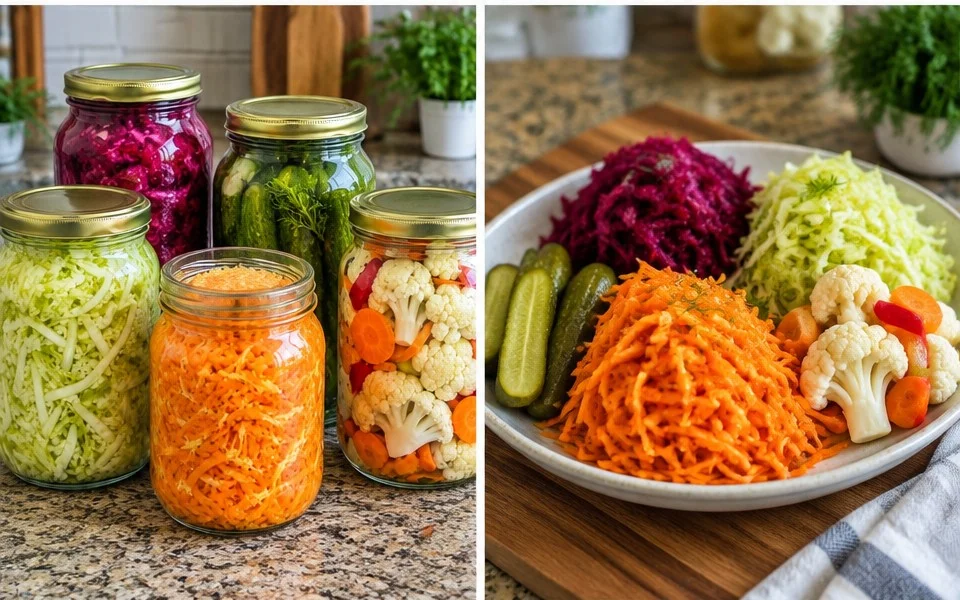
Fermented carrots and ginger make a wonderfully simple and vibrant probiotic-rich side that’s easy to prepare at home. This traditional fermentation brings natural tanginess and a mild spicy warmth from ginger to grated carrots, creating a delicious salad accompaniment. It’s perfect for anyone wanting to add gut-friendly fermented foods to their everyday meals without complicated steps or ingredients. Plus, this low-calorie, vegetable-based recipe is naturally vegan and gluten-free, making it suitable for many dietary preferences. You may also find 6 Ingredient Creamy Tomato White Bean Soup useful.
Why This Recipe Is Helpful
- Uses only three basic ingredients, making it affordable and easy to prepare.
- Naturally promotes beneficial bacteria through fermentation, supporting digestive balance.
- Requires minimal hands-on time and can ferment at room temperature for flexibility.
Best For
This recipe suits home cooks who enjoy fresh, tangy fermented vegetables and want simple ways to include probiotics in their diet. It’s great as a side for salads, sandwiches, or main dishes.
Be Careful If
If you are new to fermented foods, start with small amounts to assess tolerance, as fermentation can produce natural acidity and some gas. People with specific medical conditions should consult healthcare providers before increasing probiotic intake.
Ingredients
- 500 g (about 4 cups) carrots, grated
- 15 g (about 1 tablespoon) fresh ginger, grated
- 1 teaspoon salt (preferably sea salt or kosher salt)
Ingredient Notes
- Fresh ginger adds a gentle spicy kick and natural antimicrobial properties.
- Salt is essential for proper fermentation, helping preserve vegetables and inhibit undesirable bacteria.
- Use fresh, organic carrots when possible to avoid pesticides and ensure better fermentation.
Kitchen Tools Needed
- Clean glass jar with a wide mouth (1-liter/1-quart size works well)
- Vegetable grater
- Mixing bowl
- Spoon or fermentation weight (optional, to keep carrots submerged)
- Loose-fitting lid or cloth cover with rubber band
Step-by-Step Instructions
- Grate the carrots and fresh ginger finely, then place them together in a clean mixing bowl.
- Sprinkle 1 teaspoon of salt over the grated mixture and toss gently to combine.
- Let the salted mixture sit for 10 minutes to draw out natural juices.
- Pack the carrots and ginger tightly into the clean glass jar, pressing firmly to remove air pockets. Make sure the vegetables are submerged in their released juices to prevent spoiling.
- Cover the jar loosely with a lid—avoid sealing it completely to allow fermentation gases to escape.
- Store the jar at room temperature, away from direct sunlight, for 1 to 3 weeks. Check periodically to ensure the vegetables remain submerged and to taste-test for desired tanginess.
- Once fermented to your liking, secure the lid tightly and refrigerate. Consume 1–2 tablespoons daily as a fresh condiment or side salad.
Pro Tips
- Press down firmly each time you pack the jar to expel air and keep vegetables submerged.
- Begin tasting after one week, as fermentation speed varies by room temperature.
- Use a fermentation weight or clean small object to keep veggies under the brine.
- Avoid using iodized or table salt, which can interfere with fermentation.
Lighter Swaps
This recipe is naturally low-calorie and nutrient-rich; no lighter swaps are necessary without compromising flavor or fermentation quality.
Common Mistakes
- Not packing the vegetables tight enough, leading to exposure to air and mold risk.
- Sealing the jar airtight, which traps gases and may cause the jar to explode.
- Skipping the waiting time to let juices draw out, resulting in a dry, ineffective brine.
Serving Suggestions
Enjoy this fermented carrot and ginger salad as a tangy side to grilled meats, atop grain bowls, or as a crunchy topping for sandwiches and wraps.
Storage Instructions
Refrigerate after fermentation completes. The fermented vegetables keep well for up to 1 month in the fridge.
Reheating Tips
This recipe is best served cold or at room temperature. Heating can kill the beneficial bacteria and affect texture.
Nutrition Estimate (per 2-tablespoon serving)
- Calories: 25
- Protein: 0.5 g
- Carbohydrates: 6 g (mostly fiber)
- Fat: 0 g
Values are estimates and may vary by ingredients and portion size.
Recipe Summary
Prep Time: 15 minutes
Cook Time: 0 minutes
Fermentation Time: 1–3 weeks
Total Time: 1 week to 3 weeks and 15 minutes prep
Servings: About 10
Cuisine: Fermented/Probiotic
Course: Side Dish
Calories: 25 per serving
Frequently Asked Questions
Q: Can I speed up the fermentation process?
A: Fermentation time depends mainly on room temperature. Warmer rooms speed it up, but rushing it too much can affect flavor and texture.
Q: What if I see mold on top?
A: Remove any mold immediately if it’s light and limited, then ensure the vegetables stay submerged. Heavy mold means discarding that batch.
Q: Can I use other vegetables with this method?
A: Yes, root vegetables and cabbage varieties ferment well using similar salt brining techniques. For inspiration, you might explore more recipes like a creamy tomato and bean soup that pairs nicely with fermented sides.
Fermenting carrots and ginger is an easy doorway into probiotic-rich homemade foods. The bright, slightly spicy, and crunchy results add character to many meals and provide a natural way to enjoy fermented vegetables. Give it a try for a simple, affordable, and nutritious addition to your kitchen.
Have you made this recipe?
Share how it turned out or leave a helpful tip for the next cook.
0 comments